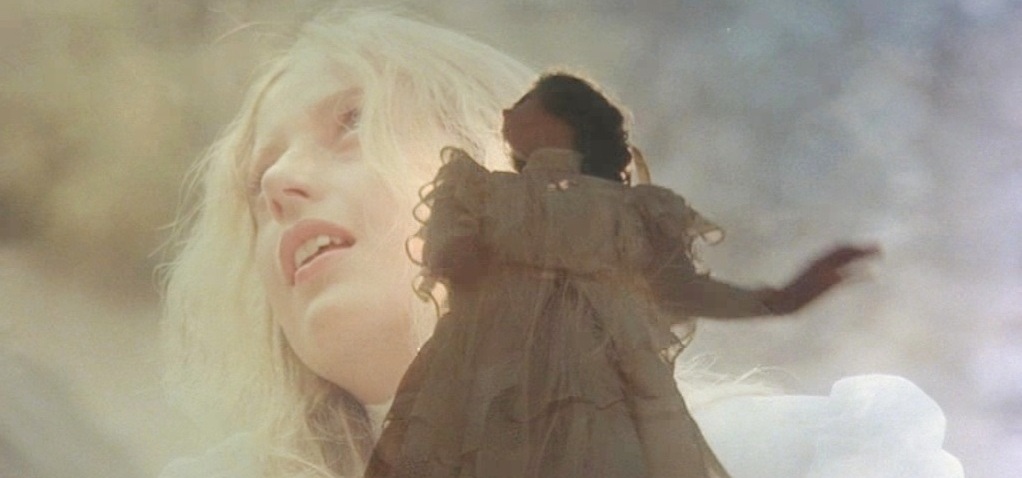
This year marks the 50th anniversary of the release of Peter Weir’s landmark film, Picnic at Hanging Rock. And although the so-called Australian New Wave had been gathering pace throughout the first half of the 1970s, it was the international success of this film (and Sunday Too Far Away) that saw this wave begin to break on foreign shores.
That success didn’t come until after its starring role at the 1976 Cannes Film Festival – Sunday Too Far Away had, in fact, already played the previous year to much acclaim – but as the film had its world premiere in Adelaide in August 1975 – this seems as good a year as any to celebrate its 50th anniversary and its legacy within the last five decades of Australian cinema.
As well as an upcoming theatrical re-release via BFI Distribution (using the same Peter Weir and Russell Boyd-approved 4K restoration that was the basis for Second Sight’s recent home media release), the significance of Picnic at Hanging Rock will be celebrated as part of a special symposium being held at the University of Sheffield (and online) in June.
Below is the call for papers currently being circulated on various academic mailing lists:
PICNIC @ 50
The Sheffield Centre for Research in Film (SCRIF)
Annual Symposium
Friday 20th June 2025, 9am-5pm
The University of Sheffield/Hybrid Event
This event marks fifty years since the release of a landmark film of the Australian film revival, Peter Weir’s Picnic at Hanging Rock (1975). Brian McFarlane commented on Picnic’s ‘euphoric over-valuation’ at the time of its release, but Weir’s film became a flagship production of the ‘New Wave’. It cemented Weir’s position within the cinema revival, established the ‘AFC genre’ of respectable literary adaptations, but also contributed to the vein of horror film and ‘Gothic’ cinema which has distinguished Australian film production ever since. As a critical success and a touchstone for informed audiences of Australian cinema, this event asks: How has Picnic at Hanging Rock been understood and read? How should it be re-read or repositioned? What does its mix of art and horror say about Australian and other national cinemas? How might the film and its fame be compared with other canonised examples of national cinema and national cinematic discourse? Are there comparable remembered (or forgotten) Australian films of similar or greater importance? Does its model and record elicit comparisons with the texts and contexts of other post-colonial and settler cinemas (such as Canada, South Africa or New Zealand)? Where does Australian cinema stand, 50 years later?
Our guest speaker for this event will be Dr Stephen Morgan (King’s College, London).
Papers of approximately 20 mins. duration are invited on topics related to the reception, (re)interpretation, aesthetics and legacy of Picnic at Hanging Rock but also to the subjects of its Australian cinema context, history, culture and production, and to the significance and understanding of landmark films more widely. Subjects may include but are not restricted to:
- The appraisal, reappraisal or refutation of Picnic at Hanging Rock as national cinematic text
- The position of Picnic at Hanging Rock within the international canon
- The influence of Picnic at Hanging Rock in Australia and beyond
- The place of horror, Gothic and/or genre cinema in Australian and other national cinemas
- The significance of settler colonialism, race/indigeneity and gender in Australia’s national cinema
- The state and status of the ‘new’ Australian cinema after over fifty years of production
- The influence of auteurism and art film in national cinema discourses
- The continuing importance of national landmark films – of the 1970s or other eras
Please send proposals (300 words max.) for papers and brief bio details by Friday 2nd May 2025 to:
Jonathan Rayner (j.r.rayner@sheffield.ac.uk)
 Dr Stephen Morgan